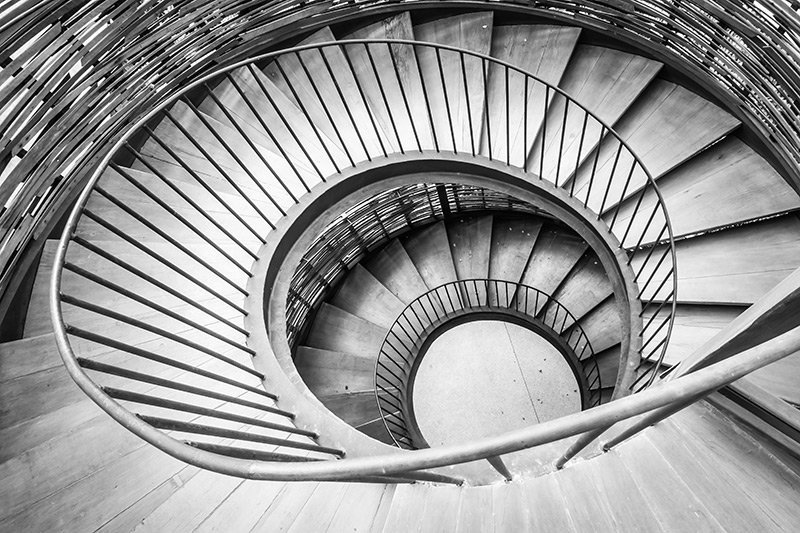
The Golden Triangle is a compositional guideline in photography that helps photographers create visually dynamic and balanced images. While less commonly discussed than the Rule of Thirds, the Golden Triangle is a powerful tool for guiding the viewer’s eye and creating tension, movement, and harmony in a photograph. Its application is particularly valuable in scenes with strong diagonal lines, such as landscapes, architectural photography, and street photography.
Understanding the Golden Triangle
At its core, the Golden Triangle divides an image into four triangular sections using one diagonal line running from one corner of the frame to the opposite corner, and two lines extending from the other two corners at right angles to the first diagonal. The result is four triangles of differing sizes within the frame. This structure allows a photographer to position points of interest along these lines or at the intersections, creating balance while guiding the viewer’s gaze naturally through the composition.
Unlike the Rule of Thirds, which divides a frame into a simple 3×3 grid, the Golden Triangle is inherently diagonal. This gives it a sense of motion and dynamic tension, which is ideal for compositions where movement, lines, or perspective plays a significant role. Diagonal lines naturally suggest depth and lead the eye across the frame, making the Golden Triangle particularly effective in storytelling through photography.
Historical Context and Origins
The Golden Triangle is rooted in principles of visual harmony and geometric composition, echoing the classical ideas of proportion and balance that date back to Renaissance art. Artists and architects have long used diagonals and triangles to structure compositions, creating a sense of movement or focus while maintaining harmony.
In photography, these principles were adapted to suit the rectangular frame of the camera. The Golden Triangle builds on the human eye’s natural tendency to follow lines and edges, guiding viewers’ attention toward key elements without overwhelming the composition.
When to Use the Golden Triangle
The Golden Triangle works exceptionally well in certain types of photography:
- Landscapes: When photographing natural or urban landscapes, the Golden Triangle helps to emphasize leading lines such as rivers, roads, paths, fences, or mountain ridges. By aligning these elements along the diagonal lines, photographers can create a sense of depth and movement.
- Architectural Photography: Buildings, bridges, and staircases often contain strong lines and angles. Applying the Golden Triangle can enhance the geometric appeal of these structures and guide the eye through architectural details.
- Action and Movement: Sports or street photography, where subjects are moving, benefit from the dynamic tension created by the diagonal lines of the Golden Triangle. Placing the subject along a diagonal line encourages the viewer to follow the action naturally across the frame.
- Abstract Photography: In abstract compositions, the Golden Triangle can provide a structured balance to otherwise chaotic or irregular elements, making the image feel intentional and visually appealing.
How to Apply the Golden Triangle
To apply the Golden Triangle, follow these steps:
- Identify the Diagonal Line: Start by determining the primary diagonal of your composition. This line should extend from one corner of the frame to the opposite corner and should represent a key compositional element. For instance, a winding river in a landscape could form your primary diagonal.
- Draw the Perpendicular Triangles: From the remaining two corners, draw lines perpendicular to the main diagonal. This will divide the frame into four triangles. Modern cameras and post-processing software often include overlays or guides to help visualize this.
- Position Key Elements: Place points of interest along the diagonal lines or at the intersections. For example, in a landscape shot, a tree or rock formation could sit on a triangle line, leading the viewer’s eye through the scene.
- Balance the Composition: Make sure that the visual weight of the elements is balanced across the triangles. The largest triangle can hold a dominant subject, while the smaller triangles can contain secondary elements or negative space to prevent overcrowding.
- Experiment with Rotation: The Golden Triangle can be rotated depending on the orientation of the diagonal. For instance, the diagonal can run from top-left to bottom-right or top-right to bottom-left, depending on the movement or direction you want the viewer to follow.
Comparison with Other Composition Techniques
While the Golden Triangle is distinct, it is related to other compositional rules in photography:
- Rule of Thirds: Both divide the frame to guide visual interest. The Rule of Thirds uses horizontal and vertical lines to create balance, whereas the Golden Triangle relies on diagonals for dynamic tension.
- Diagonal Method: This is a simplified version of the Golden Triangle, where a single diagonal line is used to guide the composition. The Golden Triangle expands this with perpendicular lines, creating more compositional options.
- Golden Ratio (Phi Grid): The Golden Triangle shares the goal of creating aesthetically pleasing proportions, but the Golden Ratio focuses on a spiral or nested rectangles rather than diagonals.
Practical Tips for Photographers
- Use Natural Lines: Look for existing lines in the scene, such as roads, rivers, fences, shadows, or architectural features. These naturally lend themselves to a Golden Triangle composition.
- Diagonal Movement: Place subjects moving along a diagonal line to emphasize direction and action. For example, a cyclist riding along a path or a bird flying across the frame will feel more dynamic.
- Foreground, Middle Ground, Background: Leverage the triangles to separate the composition into layers, enhancing depth. For example, place a subject in the foreground triangle, leading to a middle-ground element, and finally the background.
- Crop with Care: If your camera does not have a Golden Triangle overlay, you can always crop your image in post-processing to align with the triangles. Tools like Adobe Lightroom or Photoshop can help visualize and refine this structure.
- Combine with Other Rules: The Golden Triangle does not have to be used exclusively. Combining it with other rules, such as the Rule of Thirds or leading lines, can further enhance the visual appeal of your photograph.
Examples in Practice
- Landscape Photography: Imagine a mountain range with a river winding through the valley. The river can form the primary diagonal, with the mountains forming the perpendicular lines of the triangles. A lone tree or rock formation placed along one of the smaller triangle lines can act as a focal point, guiding the viewer’s eye naturally through the scene.
- Street Photography: A street scene with converging roads can be perfectly suited to the Golden Triangle. A person walking along the diagonal line of the road can lead the viewer through the frame, while buildings or signage occupy the smaller triangles to add context and balance.
- Architectural Photography: A staircase photographed from an angle creates strong diagonal lines. By aligning the staircase with the primary triangle line and positioning a person ascending or descending along it, the composition gains both dynamism and depth.
Limitations and Considerations
While the Golden Triangle is versatile, it is not always the ideal choice:
- Simplicity vs. Complexity: In minimalistic compositions, the diagonal lines may introduce unnecessary tension. Simple subjects may be better served by the Rule of Thirds or centered compositions.
- Viewer Focus: Overusing diagonal lines or cramming multiple elements along the triangles can confuse the viewer rather than guide them. The key is balance and clarity.
- Intuition vs. Rule: The Golden Triangle is a guideline, not a strict rule. Experienced photographers often use it intuitively, adjusting the lines based on the scene rather than strictly adhering to geometric perfection.
Conclusion
The Golden Triangle is a powerful tool in a photographer’s toolkit, offering a structured yet dynamic approach to composition. By leveraging diagonal lines and triangular divisions, photographers can create images that feel balanced, visually engaging, and naturally guide the viewer’s eye. Whether you are capturing sweeping landscapes, urban architecture, action-filled street scenes, or abstract forms, the Golden Triangle provides a method to add depth, tension, and movement to your photographs.
Mastering this technique requires practice, observation, and experimentation. By learning to see the diagonals and triangles within a scene, photographers can elevate their compositions, producing images that are not only aesthetically pleasing but also emotionally compelling. The Golden Triangle reminds us that photography is not just about capturing a moment—it’s about shaping the viewer’s experience, using lines, angles, and proportions to tell a visual story.