Composition in cinematography is the deliberate arrangement of visual elements within the frame to communicate meaning, emotion, and narrative intent. It is not simply about making a shot “look nice.” It is about guiding the audience’s eye, shaping psychological response, and reinforcing story themes without dialogue. From the silent era of filmmaking to contemporary digital cinema, composition has remained one of the most powerful tools available to cinematographers and directors.
Among the most fundamental compositional principles are the rule of thirds, symmetry, and leading lines. Though simple in theory, each can be used with subtlety and depth to create striking cinematic imagery. Mastery of these techniques allows filmmakers to shape attention, mood, and character perception in sophisticated ways.
The Rule of Thirds
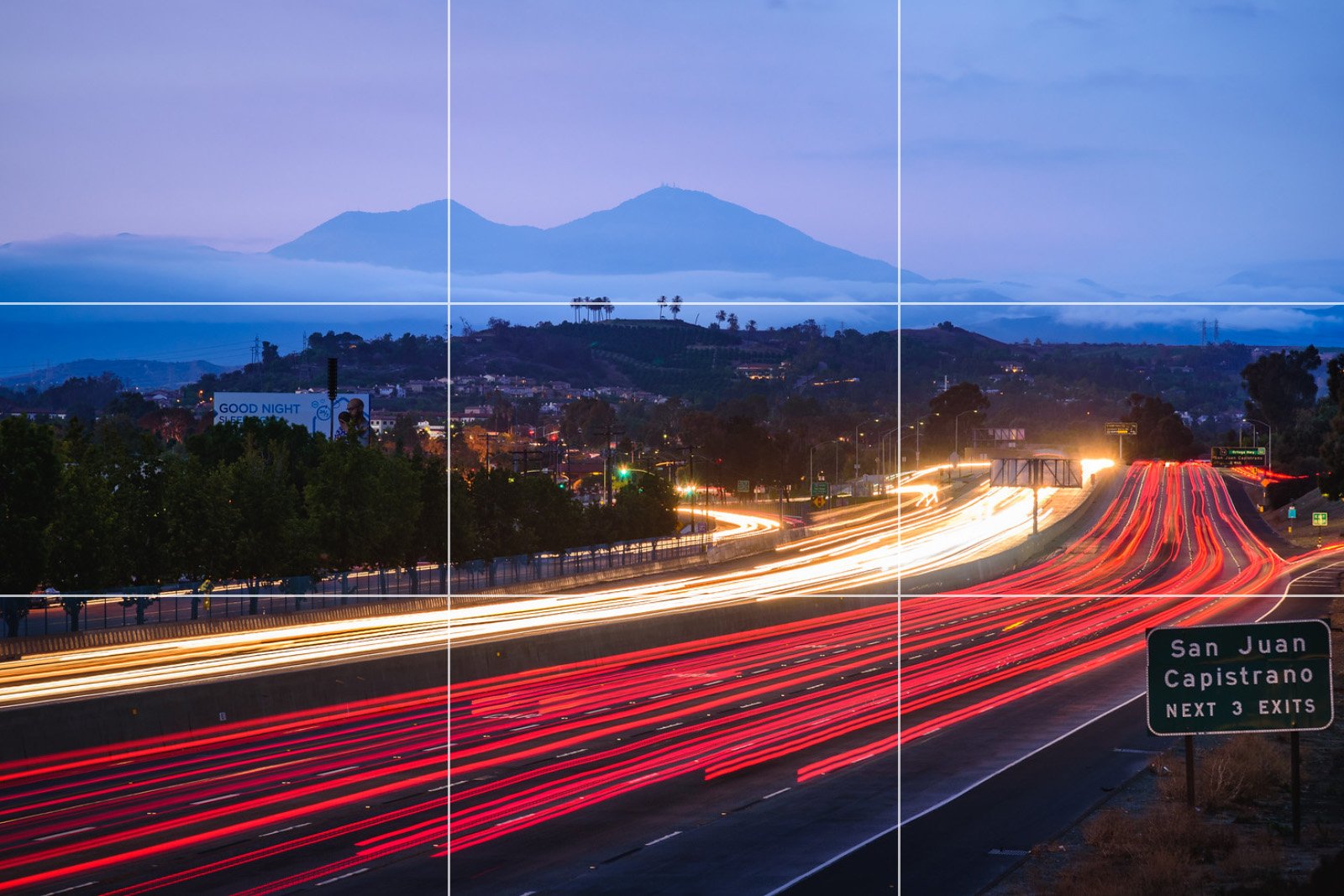
The rule of thirds divides the frame into nine equal sections by two horizontal and two vertical lines. The key idea is that important visual elements should be placed along these lines or at their intersections rather than in the exact center of the frame.
Why It Works
The human eye is naturally drawn to areas slightly off-center. A perfectly centered subject can feel static or formal. By placing a subject along a third line or intersection point, the image often feels more dynamic and natural. This asymmetry introduces visual tension and balance simultaneously.
For example, when framing a character in a medium shot, placing them on the left or right third allows negative space on the opposite side. This space can suggest isolation, anticipation, or the presence of something unseen. In dialogue scenes, alternating characters on opposite thirds maintains visual clarity while reinforcing emotional distance or connection.
In landscape cinematography, the rule of thirds is frequently applied to horizon placement. Placing the horizon on the lower third emphasizes the sky, suggesting openness or hope. Placing it on the upper third emphasizes the land, grounding the image and focusing on earthly detail.
Psychological Impact
Composition subtly influences how viewers interpret characters. A character positioned on a third with empty space ahead of them implies movement or direction. If the space is behind them, it can suggest entrapment or lack of agency. Cinematographers use this to reflect internal states visually.
Consider how directors like Steven Spielberg frequently place characters off-center in moments of awe or fear. The empty space becomes charged with narrative tension, suggesting something outside the frame.
Breaking the Rule
Importantly, the rule of thirds is not a rigid law. It is a guideline. Some of the most powerful cinematic images deliberately ignore it. Knowing when to break the rule is part of compositional maturity. If a filmmaker centers a character after consistently placing them on a third, the shift can feel significant and intentional.
Symmetry in Cinematography
Symmetry involves arranging elements so that both sides of the frame mirror each other, either perfectly or approximately. It creates balance, order, and visual harmony.
Visual Stability and Formalism
Symmetry often conveys control, rigidity, or artificial perfection. When a character is centered in a symmetrical frame, they appear dominant or significant. This approach can feel architectural, almost painterly.
Few filmmakers exemplify symmetrical composition more clearly than Wes Anderson. His films are renowned for meticulously centered characters and perfectly balanced production design. In works such as The Grand Budapest Hotel, symmetry becomes part of the storytelling language, reinforcing themes of order, nostalgia, and structured worlds that are often on the verge of collapse.
Similarly, Stanley Kubrick employed symmetry masterfully in The Shining. The hotel corridors are framed symmetrically, creating a sense of unsettling perfection. The precise balance enhances the psychological horror. The viewer feels trapped within the geometry of the space, mirroring the character’s mental confinement.
Emotional Effects of Symmetry
Symmetry can evoke:
- Authority and power
- Psychological tension
- Ritual or formality
- Artificial order
When symmetry is slightly broken—perhaps a character is off by just a few inches—it can create subconscious discomfort. The viewer senses imbalance even if they cannot articulate it. Cinematographers use this subtle disruption to heighten unease.
Central Framing
Central framing is a subset of symmetry. Placing the subject dead center can make them appear iconic, monumental, or confrontational. It forces the viewer to engage directly with the subject.
However, overuse can reduce dynamism. That is why symmetrical compositions are often intercut with asymmetrical ones to maintain visual rhythm.
Leading Lines
Leading lines are visual pathways within the frame that guide the viewer’s eye toward a subject or focal point. These lines can be roads, hallways, fences, shadows, architectural features, or even light beams.
Directing Attention
The eye naturally follows lines. Cinematographers use this tendency to control where viewers look first, second, and third within the frame.
For example, in a scene set on a railway platform, the tracks converging in the distance draw the eye toward a character standing at the vanishing point. The lines emphasize their isolation or journey.
In urban settings, staircases, corridors, and window frames frequently serve as compositional guides. In epic filmmaking, directors such as Christopher Nolan often use architectural lines to emphasize scale and perspective, as seen in Inception.
Depth and Perspective
Leading lines create depth by establishing foreground, middle ground, and background relationships. Cinematography is inherently two-dimensional, but strong perspective lines generate the illusion of three-dimensional space.
This is especially powerful when combined with wide-angle lenses, which exaggerate perspective. The lines stretch dramatically toward a vanishing point, immersing the audience in the environment.
Emotional Symbolism
Lines are not merely technical tools—they carry symbolic weight:
- Vertical lines suggest strength, stability, or oppression.
- Horizontal lines imply calm, rest, or stagnation.
- Diagonal lines convey energy, tension, or instability.
A staircase shot diagonally across the frame feels more dynamic than one shot straight on. A tilted diagonal (Dutch angle) amplifies instability even further.
Combining Techniques
The most effective cinematography often blends these principles rather than relying on one alone.
For example:
- A symmetrical hallway can contain strong leading lines that converge on a centrally framed character.
- A rule-of-thirds composition can use diagonal lines to guide attention toward the subject’s face.
- A symmetrical setup can be disrupted by placing a character slightly off-center, introducing tension.
In Blade Runner 2049, cinematographer Roger Deakins frequently combines leading lines with precise framing to create vast, immersive environments. Characters are often dwarfed within symmetrical architecture, emphasizing themes of identity and existential isolation.
Practical Application on Set
Understanding theory is only part of composition. Practical considerations include:
- Lens choice: Wide lenses exaggerate leading lines and depth. Telephoto lenses compress space and reduce apparent line convergence.
- Camera height: A low angle can turn vertical lines into towering, oppressive shapes.
- Blocking: Actor placement relative to lines and thirds determines emotional tone.
- Lighting: Light itself creates lines and shapes that guide the eye.
Modern digital cameras often include on-screen grid overlays to assist with rule-of-thirds framing. However, experienced cinematographers internalize these grids and focus more on instinctive balance and storytelling intent.
Composition as Storytelling
Ultimately, composition is not decorative—it is narrative. Every framing choice should answer a storytelling question:
- Who holds power in this scene?
- What emotional state is the character in?
- Where should the viewer look?
- What themes are being reinforced?
The rule of thirds can suggest realism and natural balance. Symmetry can convey control, ritual, or psychological unease. Leading lines can direct attention, create depth, and symbolize movement or entrapment.
The key is intentionality. When composition is deliberate, the audience feels coherence even if they are unaware of the mechanics behind it.
Conclusion
Composition in cinematography is the invisible architecture of visual storytelling. The rule of thirds introduces balance and dynamic tension. Symmetry provides order, intensity, and psychological structure. Leading lines guide perception and create depth. When combined thoughtfully, these techniques transform a simple frame into a meaningful cinematic statement.
The greatest cinematographers understand that composition is not about rigid adherence to rules but about visual language. Like grammar in writing or harmony in music, compositional principles provide structure. Within that structure lies infinite expressive possibility.
Whether crafting an intimate dialogue scene or an epic landscape shot, the cinematographer’s frame is a canvas. Through the careful placement of subjects, lines, and balance, composition shapes not just what we see—but how we feel.