Cinematography is the art and craft of capturing moving images for cinema, television, and digital media. It is a discipline that combines technical skill, aesthetic sensibility, and psychological understanding to tell stories visually. While directors shape narrative, actors provide performance, and writers construct dialogue, the cinematographer—often called the director of photography (DP)—translates these elements into compelling images. Cinematography theory seeks to understand how and why images affect audiences, focusing on principles such as composition, lighting, lens choice, camera movement, color, and the interplay between visual form and narrative content. By examining these principles, filmmakers can craft images that not only look beautiful but also enhance story, mood, and character development.
Composition in Cinematography
Composition is the arrangement of visual elements within the frame. It dictates how viewers perceive space, relationships between characters or objects, and the emotional weight of a scene. Composition is the cinematographer’s tool for guiding attention, creating rhythm, and shaping the psychological impact of imagery.
Rule of Thirds
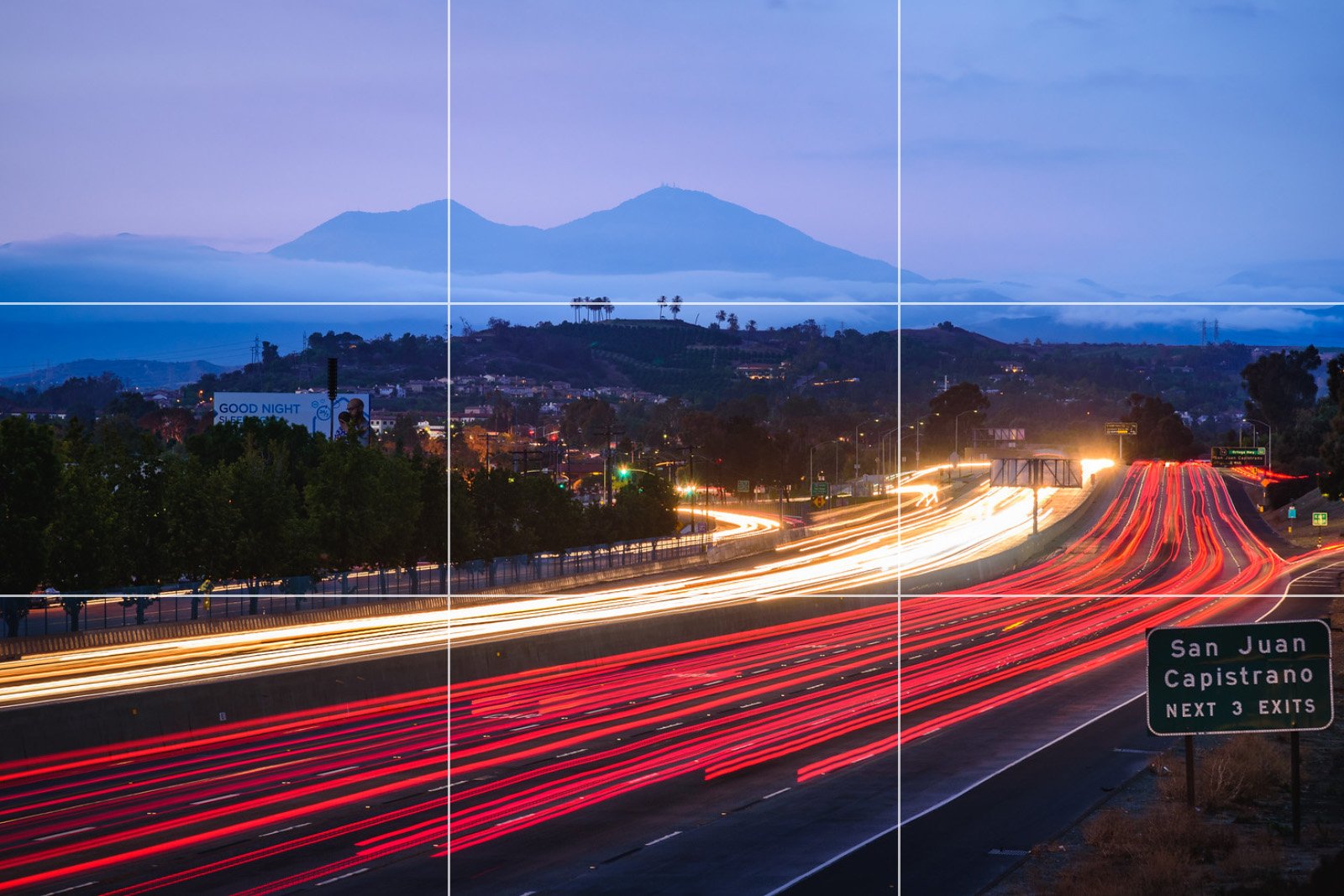
One of the most widely recognized compositional principles is the rule of thirds, which divides the frame into nine equal sections using two vertical and two horizontal lines. Placing key subjects along these lines or at their intersections creates a natural balance while introducing visual tension. A centered composition can feel static, but placing a character on a third line encourages the eye to move across the frame, engaging the audience.
For example, in dialogue scenes, one character may be positioned on the left third and another on the right third. This spacing not only ensures clarity but also communicates emotional distance or connection. In landscapes, placing the horizon along the lower third emphasizes the sky, suggesting openness or possibility, while placing it along the upper third emphasizes foreground detail and grounded reality. Many filmmakers, including Steven Spielberg, utilize off-center compositions to create tension or guide audience focus.
Symmetry
Symmetry involves mirroring elements across the frame to create balance. It can evoke harmony, control, or formal elegance. Perfect symmetry is often associated with visual stability and can make characters appear dominant or iconic. Directors such as Wes Anderson famously employ symmetry in films like The Grand Budapest Hotel, where characters and environments are meticulously centered, creating a sense of order that reinforces narrative themes.
Symmetry can also generate psychological effects. Slight deviations from symmetry introduce subtle discomfort, emphasizing tension or imbalance. Stanley Kubrick used this technique masterfully in The Shining, framing hotel corridors symmetrically but allowing small anomalies to produce unease, reflecting the protagonist’s mental state.
Leading Lines
Leading lines are compositional tools that direct the viewer’s eye toward a focal point. Lines can be literal, such as roads, hallways, or fences, or abstract, such as the edges of shadows or beams of light. They establish depth, guide attention, and can suggest movement or tension.
For instance, a railway track converging in the distance draws the viewer toward a character at the vanishing point, emphasizing isolation or destiny. Diagonal lines convey energy or instability, vertical lines suggest strength or oppression, and horizontal lines imply calm or rest. Leading lines are not merely technical; they contribute to the narrative, reinforcing themes or emotional states.
Lighting Theory in Cinematography
Lighting is arguably the most expressive element in cinematography. It defines visibility, emphasizes form, conveys mood, and can symbolize narrative ideas. Cinematographers manipulate intensity, direction, color, and quality of light to create specific visual and emotional effects.
Three-Point Lighting
The foundational technique in cinematic lighting is three-point lighting, consisting of key, fill, and backlight:
- Key Light: The primary light source, shaping shadows and defining subject form.
- Fill Light: Softens shadows and balances contrast, ensuring visibility without flattening the image.
- Backlight: Separates the subject from the background, creating depth and enhancing dimensionality.
This system provides flexibility, allowing cinematographers to achieve realistic or stylized effects. A romantic scene may employ soft key and fill lights with a gentle backlight, while a suspenseful scene might use a single harsh key light to create dramatic shadows.
High-Key vs. Low-Key Lighting
Lighting can also be categorized by tonal quality:
- High-Key Lighting: Bright, even illumination with minimal shadows, often used in comedies and musicals to suggest clarity, safety, or optimism.
- Low-Key Lighting: Dominated by shadows and strong contrast, low-key lighting conveys tension, danger, or moral ambiguity. It is common in film noir, horror, and thrillers.
Direction, Angle, and Color
The direction of light influences perception:
- Top Lighting: Simulates sunlight, creates natural shadows.
- Side Lighting: Produces depth and texture, highlighting character features.
- Underlighting: Creates menace or unease.
- Backlighting: Generates silhouettes and isolates subjects.
Color temperature and light quality further enhance storytelling. Warm tones evoke comfort or intimacy; cool tones suggest detachment or tension. Hard light produces sharp shadows and drama, while soft light wraps subjects in a gentle, flattering glow. Mastery of lighting allows cinematographers to control narrative perception subtly.
Camera Movement Theory
Camera movement shapes audience perception and emotional engagement. It transforms a static frame into a dynamic visual experience. Different movements carry distinct narrative meanings:
- Pan and Tilt: Horizontal or vertical movements that reveal space or follow action.
- Tracking/Dolly Shots: Move along with a subject, emphasizing journey, motion, or urgency.
- Crane Shots: Reveal scale or grandeur, often used in epic storytelling.
- Handheld or Steadicam Shots: Introduce immediacy or realism, often enhancing tension or intimacy.
- Zooms: Adjust focal length to emphasize a subject or compress space.
Movement conveys psychological cues. A slow dolly-in can create suspense or intimacy, while rapid handheld motion evokes chaos or urgency. The combination of movement with composition and lighting enhances narrative impact, as seen in films by Christopher Nolan, where architectural lines, lighting, and dynamic camera movement create immersive worlds.
Lens Choice and Depth of Field
Lens selection and depth of field significantly influence how audiences perceive space and character relationships:
- Wide-Angle Lenses: Exaggerate perspective, emphasizing vast environments or tension between foreground and background.
- Telephoto Lenses: Compress distance, isolating subjects from their environment and focusing attention.
- Shallow Depth of Field: Blurs the background, drawing attention to the subject, creating intimacy or isolation.
- Deep Focus: Keeps all elements in sharp detail, emphasizing complexity or interconnectedness in a scene.
Cinematographers use lens choice strategically to guide emotional interpretation and narrative focus. For example, Roger Deakins frequently combines shallow focus with naturalistic lighting to emphasize character emotion while maintaining visual realism.
Color Theory in Cinematography
Color is both a compositional and narrative device. Beyond aesthetic appeal, color conveys mood, symbolism, and emotional subtext.
- Warm Colors (Red, Orange, Yellow): Suggest intimacy, passion, energy, or nostalgia.
- Cool Colors (Blue, Green, Purple): Evoke detachment, melancholy, or tension.
- Color Contrast: Can highlight conflict, draw attention, or create visual hierarchy.
- Color Grading: Post-production color manipulation allows filmmakers to reinforce narrative tone, unify visual style, or create a signature aesthetic.
Directors and cinematographers often integrate color with lighting, composition, and costume design to create cohesive visual storytelling. For example, Blade Runner 2049 uses neon colors in a dystopian urban landscape to contrast warmth and artificiality, visually reinforcing narrative themes of humanity and technology.
Visual Storytelling and Narrative Function
Cinematography is ultimately a storytelling tool. Every compositional, lighting, or color decision should serve the narrative.
- Character Psychology: Lighting, lens choice, and framing communicate internal states. A character in shadow may appear morally ambiguous, anxious, or secretive.
- Theme Reinforcement: Visual motifs, such as repeated use of diagonal lines, color schemes, or symmetry, reinforce story themes.
- Emotion and Tension: Composition, camera movement, and lighting can amplify or subvert audience expectations, creating suspense, empathy, or intimacy.
- Symbolism: Light and color can represent abstract ideas like hope, danger, purity, or corruption, enriching narrative subtext.
Cinematographers like Alfred Hitchcock, Andrei Tarkovsky, and Vittorio Storaro demonstrate that cinematography is not simply decoration; it is a language that communicates story and emotion visually.
Conclusion
Cinematography theory provides the foundation for understanding and mastering visual storytelling. It encompasses composition, lighting, camera movement, lens choice, depth of field, and color, all of which interact to guide audience perception, emotion, and narrative comprehension. Composition organizes the frame and directs focus, lighting shapes mood and meaning, camera movement conveys motion and psychological perspective, lens and focus choices manipulate space and attention, and color enhances emotional resonance.
A skilled cinematographer recognizes that every shot is a deliberate choice, and that the combination of visual elements functions as a coherent language. By mastering the principles of cinematography theory, filmmakers can transform images into immersive, emotionally resonant experiences. Whether through the subtle use of shadows, the dynamic framing of a moving subject, or the careful grading of color, cinematography shapes how audiences see, feel, and understand a story. It is both a technical discipline and an art form, balancing precision with creativity, and science with emotion.
Ultimately, cinematography is storytelling through light, lens, and movement. Theory provides the tools to understand and apply this language effectively, allowing filmmakers to craft imagery that is not only visually compelling but narratively profound. Through deliberate composition, thoughtful lighting, expressive camera work, and precise use of color and focus, cinematographers create worlds that engage, captivate, and resonate with audiences long after the credits roll.
FROM THE BLOG
Latest Posts
-
Composition in Cinematography: Rule of Thirds, Symmetry, and Leading Lines
Read more: Composition in Cinematography: Rule of Thirds, Symmetry, and Leading LinesComposition in cinematography is the deliberate arrangement of visual elements within the frame to communicate meaning, emotion, and narrative intent. It is not simply about making a shot “look nice.” It is about guiding the audience’s eye, shaping…