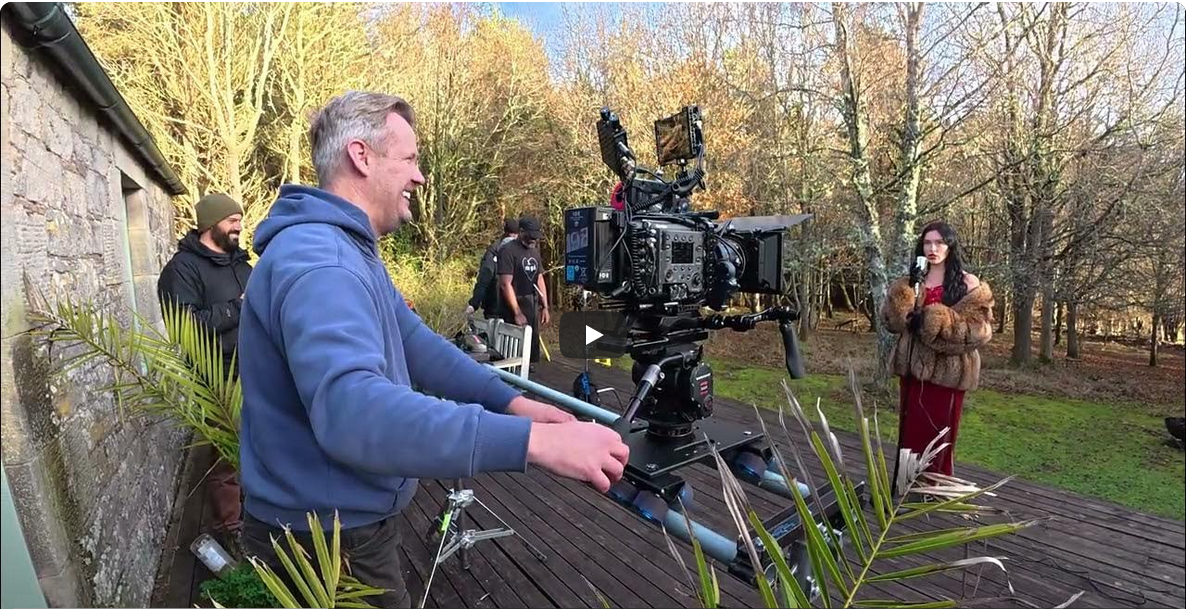
Producing a professional music video requires far more than just a camera and a song. Whether you’re creating a gritty performance video in a warehouse, a cinematic narrative piece, or a stylised studio shoot, the equipment used on set plays a crucial role in determining the final quality and creative impact. A well-prepared production set balances image quality, audio playback, lighting control, stability, workflow efficiency, and safety. Below is a comprehensive overview of the essential equipment typically used on a music video production set.
1. Camera Equipment
Cinema Cameras
At the heart of any music video production is the camera. Most professional music videos use digital cinema cameras such as the ARRI Alexa series, RED Digital Cinema cameras (like the RED Komodo or RED V-Raptor), or models from Sony (such as the FX6 or FX9).
These cameras offer:
- High dynamic range
- Professional codecs (ProRes, RAW)
- Interchangeable lenses
- Excellent colour science
For lower-budget productions, mirrorless cameras like the Sony A7S III or Panasonic GH6 may also be used.
Lenses
Lenses dramatically affect the visual style. Productions typically use:
- Prime lenses (e.g., 24mm, 35mm, 50mm, 85mm) for sharper images and cinematic depth of field.
- Zoom lenses for flexibility in fast-moving setups.
- Anamorphic lenses for widescreen cinematic looks with distinctive lens flares.
High-end sets may feature cinema lens brands such as Cooke or Zeiss.
Camera Support
To achieve smooth and stable shots, several support systems are used:
- Tripods (with fluid heads for smooth pans and tilts)
- Gimbals (e.g., DJI Ronin series)
- Steadicam rigs
- Sliders for controlled lateral movement
- Dollies and tracks for cinematic motion
- Jibs or cranes for elevated or sweeping shots
For aerial footage, drones such as those from DJI are often used.
2. Lighting Equipment
Lighting defines mood, texture, and emotional tone in a music video.
Key Lighting Units
Common professional lighting brands include ARRI and Aputure.
Typical lighting gear includes:
- LED panels (bi-colour or RGB)
- COB LED lights (e.g., Aputure 300D/600D)
- Fresnel lights
- HMI lights (for powerful daylight-balanced output)
- Tube lights (e.g., RGB tubes for stylised looks)
Light Modifiers
To shape and control light:
- Softboxes
- Umbrellas
- Diffusion sheets
- Reflectors
- Flags and cutters
- Barn doors
- Grids
For music videos with bold colour aesthetics, RGB lighting and programmable lighting systems are increasingly common.
Grip Equipment
Grip gear supports lighting and camera setups:
- C-stands
- Light stands
- Sandbags
- Clamps (e.g., Mafer clamps)
- Apple boxes
- Boom arms
Grip equipment ensures stability and safe rigging on set.
3. Audio Equipment (Playback and Sync)
Although final audio comes from the mastered track, playback equipment is essential for syncing performance.
Playback System
- High-quality speakers
- Portable PA system
- Playback laptop (often running software like Pro Tools or Ableton Live)
- Audio interface
- Extension cables and power strips
The performer lip-syncs to the track during filming, and editors later sync the footage with the studio audio.
Timecode and Sync Equipment
Professional shoots may use:
- Timecode generators
- Clapperboards (slates)
- Sync boxes
These ensure seamless post-production alignment.
4. Monitoring and Video Assist
Monitoring allows directors and cinematographers to evaluate shots in real time.
- On-camera monitors (e.g., 5–7” screens)
- Director’s monitor (larger reference display)
- Wireless video transmitters (e.g., Teradek systems)
- Video village setup (tent or shaded viewing area)
Colour-calibrated monitors ensure accurate exposure and colour judgement.
5. Power and Data Management
Music video shoots often involve multiple lighting units and electronic devices.
Power Distribution
- Extension leads
- Power distribution boxes
- Generators (for outdoor or remote locations)
- Battery systems (V-Mount or Gold Mount batteries)
Data Storage
- High-speed memory cards (CFexpress, CFast, SD)
- Card readers
- Backup hard drives (SSD and RAID systems)
- Laptop with editing software for dailies
A dedicated data wrangler may manage footage backups to prevent data loss.
6. Art Department Equipment
Music videos frequently rely heavily on visual styling and set design.
- Props and set dressing materials
- Backdrops (paper rolls, fabric, green screen)
- Fog or haze machines
- Wind machines
- Practical lighting (neon signs, lamps)
- Makeup and wardrobe kits
Green screens allow for visual effects in post-production, while haze machines enhance light beams and atmosphere.
7. Special Effects and Creative Tools
Depending on the concept, additional tools may be required:
- Smoke machines
- CO₂ cannons
- Confetti cannons
- Rain machines
- LED walls for virtual production
- Projection systems
High-end productions may use LED volume stages similar to those pioneered by studios using technology from companies like Industrial Light & Magic.
8. Safety Equipment
Safety should never be overlooked.
- First aid kit
- Fire extinguishers
- High-visibility vests
- Cable covers to prevent tripping
- Gloves and hard hats (for industrial locations)
- Risk assessment documentation
Professional sets appoint a safety officer or production manager to oversee compliance.
9. Communication Equipment
Efficient communication is vital on busy sets.
- Walkie-talkies
- Headsets
- Call sheets (printed or digital)
- Production laptops or tablets
Clear communication prevents delays and enhances workflow efficiency.
10. Post-Production Preparation Equipment
Even though post-production happens later, preparation begins on set.
- Colour charts (e.g., X-Rite ColorChecker)
- Grey cards
- Metadata logging tools
- Script supervisor notes
Footage is typically edited using software such as Adobe Premiere Pro, DaVinci Resolve, or Final Cut Pro. Colour grading may be completed in DaVinci Resolve, especially for cinematic music videos.
11. Additional Specialist Equipment
Some music videos incorporate unique tools:
- High-speed cameras (for slow-motion shots)
- Underwater housings
- Car rigs and suction mounts
- Motion control rigs
- 360-degree cameras
High-speed cameras allow dramatic slow-motion sequences, often seen in performance-driven visuals.
Conclusion
A music video production set is a carefully coordinated environment that blends technology, creativity, and logistics. From cinema cameras and precision lenses to dynamic lighting systems, grip equipment, playback systems, and safety tools, every piece of equipment serves a defined purpose in translating a musical concept into compelling visual storytelling.
The scale of equipment varies depending on budget and ambition. A small independent production might operate with a mirrorless camera, a gimbal, and a few LED panels. In contrast, a major-label production may use cinema cameras from companies like ARRI or RED, complex lighting rigs, cranes, drones, professional playback systems, and a full technical crew managing data, safety, and workflow.
Ultimately, the equipment used on a music video set is not just about technical capability — it is about enabling artistic expression. When the right tools are combined with strong direction, performance, and vision, the result can be a visually powerful piece that enhances the emotional impact of the music and connects deeply with its audience.